
Rupees to CAD: The Practical Guide Canadians, Students, and Newcomers Use to Convert, Send, and Save
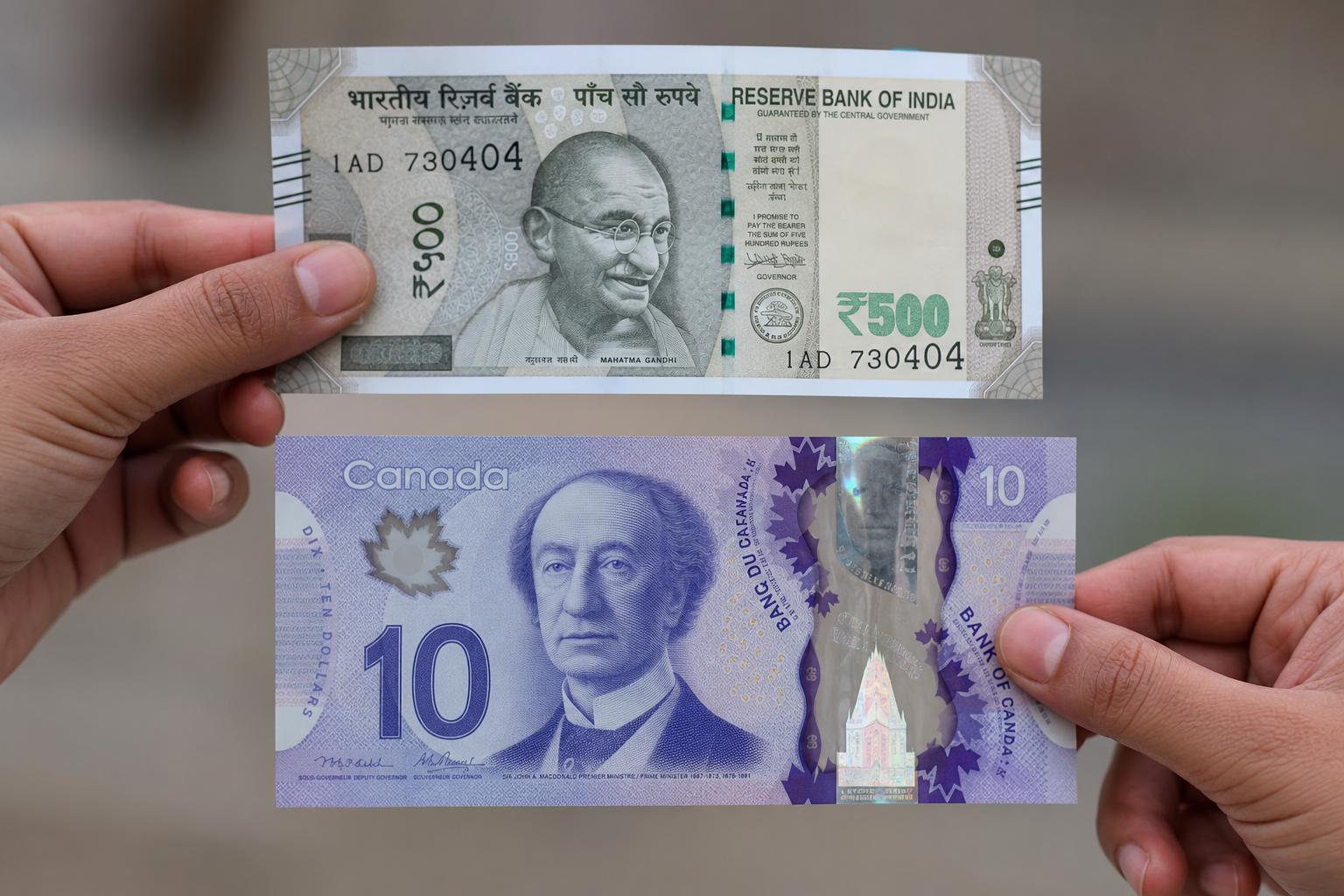
Whether you’re moving to Toronto with a suitcase and a student visa, wiring tuition from Mumbai, paying a contractor in Vancouver, or helping family settle in Calgary, the rupees to CAD question shows up fast. What’s the real exchange rate? Which method is cheapest? How long will a transfer take? And how do Canadian fees, Indian rules, and global markets shape what actually lands in your account?
This in-depth guide breaks the topic down into plain language. You’ll learn how the INR to CAD exchange rate is quoted and what moves it, how to compare providers beyond the headline number, step-by-step ways to send money from India to Canada (and the other way around), what students and newcomers should do first, how Canadian banking norms and regulations affect you, and how to avoid expensive traps like dynamic currency conversion or surprise receiving fees. We’ll also include simple math tricks, realistic examples, and conversion tables so you can check numbers at a glance.
INR to CAD 101: How to Read the Rate and Avoid Confusion
Let’s start with basics and clean up the notation that trips people up. Currency codes matter. INR is the Indian Rupee. CAD is the Canadian Dollar. If you see INR/CAD quoted as 0.0162, it means 1 Indian rupee buys about 0.0162 Canadian dollars. Flip it and you get CAD/INR. If CAD/INR is 62, one Canadian dollar equals 62 rupees. The two numbers are reciprocals: 1 ÷ 62 ≈ 0.0161.
Most Canadian sites will show CAD as the base currency—CAD/INR. Many India-based apps show rupees as the base—INR/CAD. The direction matters because it changes your mental math. If you’re converting rupees to CAD for a tuition payment, the number you care about is INR/CAD (how many dollars you get for your rupees). If you’re planning Canadian living costs in rupees, CAD/INR is more intuitive.
A quick way to sanity-check a quote: multiply INR/CAD by CAD/INR. If the product isn’t close to 1, someone’s quoting apples to oranges or you’ve read one of the rates incorrectly.
What Actually Moves the Rupees to CAD Exchange Rate
Rates aren’t plucked from thin air. The INR to CAD pair swings for reasons that are economic, political, and psychological. Understanding the big levers helps you time major payments and avoid surprises.
Interest rate decisions
Canada’s central bank (the Bank of Canada, or BoC) and India’s central bank (the Reserve Bank of India, or RBI) set policy rates. Higher relative rates often attract capital and lift a currency. If the BoC hikes while the RBI holds, CAD can strengthen versus INR. If the RBI tightens faster than Canada, the rupee may catch a bid.
Commodity prices and Canada’s terms of trade
CAD has a reputation as a “commodity currency.” Oil and other resource prices affect Canada’s export revenues; robust prices can support CAD. Weak commodity cycles can do the opposite. For INR, imported energy costs can pressure India’s current account and, at times, the rupee.
Global risk sentiment and the U.S. dollar
When markets turn “risk-off,” investors buy U.S. dollars and other safe havens. That can pressure both CAD and INR via USD strength. Because much global trade is priced in USD, movements in USD/CAD and USD/INR indirectly ripple through rupees to CAD as well.
Inflation, growth, and trade balances
Persistent inflation or widening trade deficits can weigh on a currency. Strong growth, credible fiscal policy, or reforms that attract long-term investment can support it. The market prices not just data, but expectations—the surprise factor matters.
Policy guidance and capital flows
Hints from the BoC or RBI, changes in foreign investment rules, and large portfolio flows into or out of equity and bond markets can move the pair fast. Around big events—budget announcements, central bank meetings—spreads can widen and quotes can shift multiple times a minute.
Your “Effective Rate”: More Than the Number on the Screen
The rupees to CAD conversion you see on Google is the mid-market rate—the average of buy and sell quotes between big banks. Consumers rarely get that number. Your effective rate includes the spread (the provider’s markup) plus any fixed fees and, sometimes, receiving fees charged by the other side.
Breaking down costs with a real-world example
Say you need to convert ₹500,000 to CAD. You look up the mid-market INR/CAD and see 0.01613 (equivalent to CAD/INR of 62.0). A provider offers 0.01580 and a flat fee of CAD $5. Your Canadian bank charges a $15 incoming wire fee.
- Mid-market at 0.01613: ₹500,000 x 0.01613 = CAD $8,065
- Provider’s rate at 0.01580: ₹500,000 x 0.01580 = CAD $7,900
- Subtract fees: $7,900 – $5 – $15 receiving = CAD $7,880
Your “all-in” shortfall versus mid-market is $8,065 – $7,880 = CAD $185. That’s the true cost you care about. Two providers quoting similar-looking rates can differ dramatically after fees and receiving charges are counted.
Other costs to watch
- Weekend and after-hours buffers: Many apps pad the exchange rate on weekends when markets are closed. If timing is flexible, initiate during market hours.
- Dynamic currency conversion (DCC): At a Canadian terminal, you might be offered to pay in INR. Decline. DCC almost always uses a poor rate and extra markup. Pay in CAD, let your card’s network do the conversion.
- Card foreign transaction fees: Many Canadian credit cards add ~2.5% on foreign currency purchases. A few waive it (e.g., some Scotiabank, Brim, or Home Trust products). Check your card’s terms before using it for INR or CAD conversions abroad.
- Intermediary bank fees: Traditional SWIFT wires sometimes route through intermediary banks that skim $10–$40 before the funds hit your account. Not every provider shows this upfront. Ask how they route transfers and whether the recipient will be dinged.
Ways to Convert Rupees to CAD (and CAD to INR) in Real Life
There’s no single “best” method. The right choice depends on the amount, urgency, and whether the money needs to land in a Canadian bank account, as cash in hand, or on a card you can spend from.
1) Canadian banks
Sending or receiving via your bank feels safe and straightforward. Canada’s big players—RBC, TD, Scotiabank, BMO, and CIBC—will process international wires and often offer in-branch foreign exchange. Pros: strong security, clear audit trail, familiar service. Cons: incoming wire fees commonly around $15, occasional intermediary deductions, and exchange rates that include sizeable spreads.
For rupees to CAD, many banks prefer wires to arrive in CAD. If your sender wants to remit in INR, they usually convert to CAD before the wire leaves India. Ask both sides which currency is cheaper to send and receive—it can change your bottom line.
2) Fintech transfer services
Licensed money service businesses (MSBs) in Canada—such as Wise, Remitly, Xe, OFX, WorldRemit, and others—often provide better exchange rates, clearer fee breakdowns, and faster transfers by using local payment rails in each country. A common pattern: your rupees go into a local Indian account; a matching amount of Canadian dollars is paid out locally in Canada, avoiding correspondent fees. Pros: competitive rates, speed, transparent pricing. Cons: transfer limits, verification steps, and, at times, higher fees for instant delivery.
3) FX brokers for larger transfers
For five- or six-figure conversions—home purchases, business invoices, big tuition blocks—currency specialists can be worth a call. Some Canadian brokers offer sharper rates than banks and tools like forward contracts, rate holds, or limit orders. You’ll complete robust KYC checks, and you should verify the broker is registered as an MSB with FINTRAC (Canada’s financial intelligence agency).
4) Cash exchange houses
If you need physical Canadian dollars, you’ll find currency kiosks in major Canadian cities and at airports. Airport counters are convenient but notorious for wide spreads. Downtown exchange houses and reputable chains typically beat airport pricing. For substantial amounts, call ahead and negotiate. In India, large banks and authorized dealers sell CAD cash as well; compare spreads in both countries before you travel.
5) Cards and ATMs
Arriving in Canada with an Indian debit or credit card? It will usually work on Visa/Mastercard/Plus/Cirrus networks, but expect a foreign currency markup from your issuing bank (often 3%–4%) plus a per-withdrawal charge. Canadian ATMs may add a local convenience fee. For daily spending, that adds up fast. If you have a multi-currency card that holds CAD at close to the mid-market rate, you’ll typically save. Once you open a Canadian bank account, use a local debit card for routine purchases and e-Transfers.
Sending Money from India to Canada: Step-by-Step and What to Watch
If your goal is converting rupees to CAD and depositing them in a Canadian account, you have two layers to think about: Indian rules on outward remittances and the Canadian receiving process.
Indian regulations you’ll interact with
Most resident Indians send funds abroad under the Reserve Bank of India’s Liberalised Remittance Scheme (LRS). As of recent rules, the annual cap is USD 250,000 per person per financial year for permissible current and capital account transactions (education, maintenance of relatives, gifts, investments, etc.). Indian banks and authorized dealers will ask for a purpose code and documentation.
Tax Collected at Source (TCS) may apply to foreign remittances above certain thresholds and for certain categories. For education or medical remittances, concessional TCS rates may apply, and remittances funded by education loans can be treated differently. Rules and rates have changed in recent years; verify the current TCS treatment with your Indian bank or tax advisor before large transfers. TCS is not an extra tax in the end—it can usually be claimed as credit while filing an Indian tax return—but it does affect immediate cash flow.
Details your Canadian bank will require
To receive a cross-border transfer into Canada, the sender typically needs:
- Your full legal name as it appears on the account
- Your bank’s name and address
- Institution number, branch transit number, and account number (sometimes shown together as an EFT/ACH number on your statement or app)
- Your bank’s SWIFT/BIC code (each Canadian bank publishes this)
- The currency to be received (CAD is standard for rupees to CAD transfers)
Always double-check digit counts. A single wrong digit in the transit or account number can delay funds for days.
Routing choices and the “who converts” question
If the Indian bank converts INR to CAD before sending, you’ll lock the rupees to CAD rate in India and receive Canada-ready dollars. If the bank sends in USD first (common for some corridors), you’re doing INR→USD→CAD, which adds another pair and, sometimes, extra fees. Ask the bank to quote all options and show the estimated CAD landing amount after fees. Fintech services often report a straight INR to CAD estimate with fewer unknowns.
Timelines and tracking
Standard SWIFT wires: 1–3 business days. Fintech services that use local settlement rails: sometimes same day, often within 24–48 hours. Weekends and public holidays in either country pause the clock. Ask for a payment reference and share it with the recipient in Canada; it eases reconciliation if compliance teams review the transaction.
How to avoid unnecessary delays
- Names must match exactly across documents. “Raj Singh” isn’t the same as “Rajkumar Singh” to automated screening.
- Use the correct purpose code in India and the right receiving currency in Canada (usually CAD).
- Keep tuition invoices, admission letters, or support documents handy; both sides may request them.
- Avoid last-minute Friday evening transfers; you’ll lose the weekend and may get a padded rate.
Receiving Money in Canada: Fees, Holds, and Compliance Questions
Canadian banks are straightforward, but they follow strict anti-money-laundering (AML) and know-your-customer (KYC) rules. Large or unusual transfers can trigger quick calls or requests for documents.
Incoming wire fees
It’s common for Canadian banks to charge an incoming wire fee—often in the $15–$20 range. Check your account’s fee schedule. If you expect frequent rupees to CAD transfers, some premium banking packages waive incoming fees, which can save money over time.
Holds on funds
Wires typically clear faster than cheques, but a bank may still place a short hold on large, first-time, or out-of-pattern transfers. Keep proof (remittance receipt, payment reference, sender’s details) ready to speed up any review.
FINTRAC and recordkeeping
Money service businesses operating in Canada are regulated by FINTRAC. Banks and MSBs must monitor, report suspicious transactions, and keep detailed records. Be prepared to show legitimate sources of funds, especially for high-value wires—savings statements, sale deeds, or tuition invoices. Clean documentation is your friend.
Students and Newcomers: First Steps to Make INR to CAD Easier
Canada is welcoming, but money logistics can feel bureaucratic on day one. A little prep in India and a few quick tasks after you land will make your rupees to CAD journey simpler and cheaper.
Student Direct Stream (SDS) GICs
If you’re applying through the Student Direct Stream, Immigration, Refugees and Citizenship Canada (IRCC) asks you to buy a Guaranteed Investment Certificate (GIC) from a participating Canadian bank. Popular providers include Scotiabank, CIBC, ICICI Bank Canada, and SBI Canada Bank. You wire funds from India—converted from INR to CAD—and the bank confirms your GIC for the visa process. After you arrive, a portion is released monthly to help with living expenses.
Compare fees and timelines among banks, and confirm the exact CAD amount you must remit. Exchange rates fluctuate; wire a buffer above the minimum so you don’t fall short after conversion and fees.
Tuition payments
Canadian colleges and universities often partner with payment platforms that accept INR and deliver CAD to the school at competitive rates. Others prefer direct SWIFT wires. Always follow the school’s instructions and include your student number as the payment reference. If you pay direct from India, consider locking the rupees to CAD rate for the tuition portion as soon as you receive the invoice so market swings don’t derail your budget.
Open a Canadian bank account quickly
Newcomer packages from the big banks commonly include fee waivers for the first year, free e-Transfers, and sometimes bonuses. Book an appointment and bring ID (passport, study/work permit, address proof if available). Ask for:
- Your branch transit, institution number, and account number
- The bank’s SWIFT/BIC for international wires
- Details on incoming wire fees and hold policies
Once you have a local account, family can send INR to CAD efficiently. You’ll also pay rent, a phone bill, and buy groceries without foreign card fees eroding your funds.
Credit cards and foreign transaction fees
Many Canadian credit cards charge around 2.5% on foreign currency purchases. If you’ll keep spending in INR or USD (for flights, subscriptions, or back-and-forth travel), consider a card with 0% foreign transaction fees. A handful of Canadian issuers offer them. If you use a multi-currency card from a fintech, check ATM fees and whether the CAD balance uses the mid-market rate with a transparent, low markup.
New Permanent Residents: Proof of Funds, Declarations, and Timing Your Conversion
Express Entry applicants must show proof of funds (PoF) that meet IRCC’s threshold, which is updated periodically. Funds can be in foreign currency, but they must be readily available and transferable. If your PoF is primarily in INR, remember: the rupees to CAD value can swing between when you get your ITA and when a visa officer reviews your documents. A sharp INR drop could create a shortfall on paper, even if your rupee balance hasn’t changed.
Mitigating exchange rate risk on PoF
- Hold a portion directly in CAD, ideally in a Canadian account if you’ve already opened one or with a reputable bank abroad offering CAD deposits.
- Split funds across CAD and INR to reduce currency swings.
- Document exchange rates used by your bank on the date of your certificate or balance letter.
When you physically arrive in Canada, the Canada Border Services Agency (CBSA) requires you to declare if you’re bringing CAD $10,000 or more (or the equivalent in any currency, including drafts, cheques, and other monetary instruments). This is a declaration requirement, not a tax. Failing to declare can result in penalties or seizure.
What to carry and what to wire
Carrying very large amounts of cash is risky. Many newcomers bring a small amount of CAD cash for initial expenses and ensure the rest is wired to a Canadian account, or carried as bank drafts or travelers’ cheques. Drafts are safer than cash but can take time to clear. Wires that arrive a few days after you land avoid clearing holds and reduce the risk of loss or theft during travel.
Taxes and Reporting: The Practical Bits Everyone Asks About
Currency conversion is usually a cost issue, not a tax issue, but there are situations where tax rules matter in Canada.
Gifts and support from abroad
If you’re a Canadian tax resident and receive a gift from family abroad, the amount is generally not taxable in Canada. However, the Canada Revenue Agency (CRA) can ask about the source of large deposits. Keep clear records—gift deeds, bank statements from the sender, and any remittance receipts—to answer questions if they arise.
Foreign exchange gains and investments
If you hold investments or large foreign-currency cash balances and then convert them, foreign exchange gains can be taxable as capital gains depending on the facts. Canada has a $200 de minimis rule for personal-use foreign currency transactions; gains under that on personal items (like vacation spending) are typically ignored. Investment-related gains are a different story. If you hold more than CAD $100,000 cost amount in specified foreign property (e.g., certain foreign accounts or securities), you may need to file Form T1135. Newcomers are deemed to acquire assets at fair market value on the day they become residents. If your situation is complex, get advice from a Canadian tax professional.
Indian taxes and documentation
For outward remittances, Indian TCS rules and documentation requirements can affect how much INR leaves your account for a given CAD target. Plan ahead with your Indian bank and, if needed, an Indian tax advisor, so a last-minute tuition payment doesn’t get held up or debited for a higher rate of TCS than expected.
CAD to INR: Paying Family, Bills, or Vendors Back in India
Sometimes you’re going the other way—converting Canadian dollars to rupees. The same logic applies: compare the exchange rate, fees, and delivery time. Because many transfers route via USD in the background, it’s especially important to check the all-in amount your recipient will get in INR after any intermediary cuts.
Routes for CAD to INR
- Canadian banks: Send international wires from your branch or online banking. Expect a fixed outgoing fee, a spread on the CAD to INR rate, and potential correspondent charges that reduce the INR landing amount.
- Fintechs: Many quote near-mid-market rates with a clear markup and deliver to Indian bank accounts via local rails. Transfers often arrive same day or the next business day.
- Cash pickup: If the recipient prefers cash, certain services allow pickup at authorized agent locations in India. Cash options can cost more; reserve them for urgent needs.
To keep recipients happy, ask them to share the exact account name and IFSC code. A small typo in the IFSC delays credit. Encourage them to check with their bank if they incur inward remittance fees for specific channels; most Indian banks don’t charge for local INR credits, but arrangements vary.
Everyday Spending: When Rupees Meet Canadian Prices
When you land, you’ll see prices in CAD: $3.50 to $5 for a drip coffee in major cities, $15–$20 for a fast-casual lunch, $100–$150 for a monthly transit pass depending on the city, and rent that ranges wildly by location—well over $2,000 for a one-bedroom in downtown Toronto or Vancouver, less in mid-sized cities like Halifax or Winnipeg. Converting rupees to CAD in your head helps with sticker shock and budgeting.
A quick mental math trick
If 1 CAD is roughly ₹62 (you’ll check the live rate), then:
- To go from rupees to CAD: divide by 62. Example: ₹6,200 ≈ $100 CAD.
- To go from CAD to rupees: multiply by 62. Example: $25 CAD ≈ ₹1,550.
Rates move, but picking a simple “ballpark” number like 60 or 65 keeps your estimates fast. For budgeting, build a 3%–5% buffer for rate wiggles over the month.
Tables: Example Conversions at an Illustrative Rate
These are examples only to show the math. Always check the live INR to CAD rate. In this example, we’ll use 1 CAD = ₹62, which implies 1 INR = $0.016129 CAD.
| Rupees (INR) | Rupees to CAD (at 0.016129) |
|---|---|
| ₹1,000 | $16.13 |
| ₹5,000 | $80.65 |
| ₹10,000 | $161.29 |
| ₹50,000 | $806.45 |
| ₹100,000 | $1,612.90 |
| ₹500,000 | $8,064.50 |
| ₹1,000,000 | $16,129.00 |
| Canadian Dollars (CAD) | CAD to INR (at 62) |
|---|---|
| $50 | ₹3,100 |
| $100 | ₹6,200 |
| $250 | ₹15,500 |
| $500 | ₹31,000 |
| $1,000 | ₹62,000 |
| $5,000 | ₹310,000 |
| $10,000 | ₹620,000 |
How to Compare Providers Like a Pro
When you’re choosing a route for a rupees to CAD transfer, compare along four axes: rate, fees, speed, and reliability. A quick checklist helps you get it right the first time.
Effective exchange rate
Start with the mid-market INR to CAD rate (a quick search can show it), then see what each provider offers. The difference—called the spread—is your hidden cost. Some providers show “no fee” but bake a bigger spread into the rate. Others show a small fee and a sharper rate. What matters is the final CAD amount after every deduction, including any receiving fees in Canada.
Fees and where they show up
- Outgoing: Flat fees or a percentage charge from the sender’s side.
- Intermediary: Charges deducted en route (common on SWIFT wires routed via a correspondent bank).
- Incoming: Your Canadian bank’s fee to receive the wire.
Ask for an estimate of the CAD landing amount and whether intermediary charges are possible. Fintechs that use local settlement typically avoid intermediary fees.
Speed
Urgency costs money. Instant or same-day options may carry higher fees. If your payment deadline allows, select the slower (cheaper) tier. Also consider time zones—initiating in the Indian morning can align with Canadian banking hours for quicker settlement.
Reliability and support
Check the provider’s licensing in Canada (MSB registration with FINTRAC) and India (authorized dealer status or partnerships). Look for 2FA on logins, clear support contacts, and well-rated apps. When sending large sums—SDS GICs, tuition blocks, house deposits—favor providers with a dedicated support line and proven track record on the rupees to CAD corridor.
Avoidable Pitfalls That Eat into Your Rupees to CAD
Dynamic currency conversion at POS and ATMs
Some terminals and ATMs offer to charge you in INR “for convenience.” It’s rarely a good deal. Always choose to be charged in CAD in Canada. If you’re using a Canadian card abroad, choose the local currency of that country too. Let your card network handle conversion at a competitive wholesale rate.
Sending on weekends
Many providers widen spreads when markets are closed. If you can, convert and send on weekdays during overlapping market hours. You’ll often get a better INR to CAD rate.
Typos and mismatched names
Most delays come from simple data errors—wrong IFSC, missing transit number, or a name mismatch between documents and the bank account. Triple-check before hitting send.
Unclear purpose codes (India) or vague references (Canada)
Purpose codes help Indian banks classify your remittance. Vague notes on the Canadian side can confuse reconciliation for a school or landlord. Use the exact student number or invoice reference the recipient specifies.
Assuming UPI works in Canada
Unified Payments Interface (UPI) is widespread within India and now connects to a few international corridors. Canada is not a domestic UPI market. For rupees to CAD, you’ll typically use bank wires, licensed transfer services, or card networks—not a direct UPI-to-Canadian bank route.
Hedging and Rate Tools: When You Can’t Afford a Bad Day
If you’re converting a large amount—say, for a condo deposit in Ottawa or a full year of tuition—exchange rate swings of even 1%–2% matter. You have options beyond “press send and hope.”
Forward contracts and rate holds
Some banks and FX brokers offer forward contracts that let you lock a rupees to CAD rate for a future transfer. You agree today to convert a set amount on a set date. It protects you from adverse moves but removes the chance to benefit from a better rate later. For retail clients, not every bank offers forwards; specialized brokers are more likely to. You’ll usually need to open an account and might be asked for a margin deposit.
Limit orders and alerts
Set a target rate—if INR/CAD hits your number, the system executes a conversion automatically. Even if you don’t use an order, rate alerts (push notifications or emails) help you pounce when the INR to CAD pair moves in your favor.
Staggered transfers
Split a large amount into several tranches over a few weeks. If today’s rate is fine but not fantastic, convert a portion now and the rest later to average out volatility.
Business and Freelancers: Invoicing, Contracts, and Paying Overseas Teams
For Canadian businesses paying Indian vendors or freelancers billing Canadian clients, the rupees to CAD topic isn’t just about fees—it’s about predictability and clean bookkeeping.
Invoice in your home currency when you can
Canadian freelancers often invoice in CAD and let international platforms handle conversion for foreign clients. If a client insists on INR, price in a buffer for FX movement between invoice and payment date or include a clause allowing a rate-based adjustment.
Choose settlement rails that suit the recipient
Indian recipients may prefer domestic INR credits to avoid receiving bank charges on foreign wires. Many Canadian payables platforms and MSBs can deliver INR locally using the recipient’s account and IFSC, often at better rates and with faster confirmation than traditional SWIFT wires.
Hedge predictable exposures
If your Calgary-based company pays a development team in India monthly, talk to your bank or broker about setting a budget rate. Even simple tools—standing orders or monthly rate holds—bring cost certainty.
Security and Compliance: Keep It Boring and Safe
Big international transfers attract fraudsters. A few common-sense steps go a long way.
- Verify recipient details by phone using a known number. Don’t rely solely on email attachments for bank instructions.
- Beware of “new” account details mid-process. Payment redirection scams are common. Always confirm changes with the institution on an official line.
- Enable two-factor authentication on transfer apps and your Canadian bank login.
- Use providers that are registered with FINTRAC in Canada and properly authorized in India. Registration numbers are public.
Case Studies: Realistic Rupees to CAD Scenarios
1) Paying first-semester tuition from Pune to a Toronto college
Amount due: CAD $8,000. The school supports a payment platform that accepts INR, shows the live INR to CAD rate, and promises two-day delivery. You compare with your Indian bank’s INR→CAD wire quote. The platform’s all-in cost is lower by CAD $120, and delivery includes your student number automatically in the reference. You pay via the platform, keep the receipt PDF, and the school posts the payment in 48 hours.
2) Newcomer funding a rental deposit in Vancouver
Deposit due: CAD $2,400. Family in India is sending funds. Your Canadian bank charges $15 to receive a wire. A fintech quotes INR/CAD 0.01605 plus a small fee and promises next-day delivery. Your family’s Indian bank quotes INR/CAD 0.01570 and a higher fixed fee. The fintech’s estimated CAD landing amount is $50 higher even after your incoming fee. You proceed with the fintech route and the funds arrive in time to secure the lease.
3) Small business paying a contractor in Bengaluru
Monthly invoice: CAD $3,000. You negotiate to pay in INR at the spot CAD to INR rate on the date of payment using a Canadian MSB. The contractor prefers local INR credit to avoid receiving bank wire fees. You schedule a monthly payment, set a rate alert to watch for favorable moves each cycle, and include the invoice number in every transfer to keep your books tidy.
Frequently Overlooked Tips That Save Real Money
- Compare total landed amounts, not just “fees.” A zero-fee transfer can still be expensive if the spread is large.
- Ask your Canadian bank about premium or newcomer packages that waive incoming wire fees for the first year.
- If you’re on a tight tuition timeline, send a small test payment first to validate details, then the full amount.
- Avoid airport currency exchanges for large CAD cash needs. Downtown exchanges or online-ordered pickup rates are usually better.
- If you regularly send rupees to CAD, set up automatic rate alerts and calendar reminders around BoC and RBI meetings—volatility often rises then.
Putting It All Together: A Simple Framework for Rupees to CAD Decisions
When you need to move money, ask three questions in this order:
- What outcome do I need? Cash in hand, a bank deposit, or a card balance I can spend?
- When do I need it? Today, this week, or next month?
- What amount sensitivity do I have? If the rate slips 1%–2%, does it materially affect my rents, fees, or tuition?
Then match the method:
- Small and urgent: A reputable fintech with instant or same-day options, or your bank’s wire if hours have passed.
- Large and planned: Compare banks and brokers, consider a forward contract or staged transfers, and aim for weekday conversions during market hours.
- Recurring: Automate payments, use local settlement rails to reduce correspondent fees, and revisit providers twice a year as pricing changes.
FAQ: Rupees to CAD, Answered
What’s the best way to convert rupees to CAD?
There’s no single winner for every situation. For many people, licensed Canadian MSBs and global fintechs offer the best blend of rate, transparency, and speed, especially for deposits into Canadian bank accounts. For very large amounts or when you need hedging tools, an FX broker or your bank’s treasury desk can be competitive. Always compare the all-in Canadian dollars you’ll receive after every fee.
Is it cheaper to send INR and convert in Canada, or convert to CAD in India first?
It depends on the route and the provider. If sending via a traditional SWIFT wire, converting to CAD in India can sometimes reduce correspondent costs and uncertainty, because you avoid INR→USD→CAD hops. With fintechs that use local rails, sending INR and receiving CAD is usually straightforward and cost-effective because they price the INR to CAD spread transparently. Ask both sides for the expected delivered CAD amount to decide.
How long do transfers from India to Canada take?
SWIFT wires generally take 1–3 business days. Fintechs using local rails often deliver faster—same day or within 24–48 hours. Weekends and public holidays pause settlement. Compliance checks can add time, especially on your first large transfer.
What fees do Canadian banks charge to receive money?
Incoming wire fees commonly fall in the $15–$20 range, though packages and promotions can waive them. Some wires also suffer intermediary bank deductions before arrival, which your Canadian bank doesn’t control. If you need a specific net amount in CAD, factor in these deductions.
Can I use UPI to send money directly to a Canadian bank account?
No. UPI is not a domestic Canadian payments system. For rupees to CAD, you’ll use bank wires, licensed transfer services, or card networks. Some Indian apps may partner with cross-border services behind the scenes, but you’re not sending UPI-to-Canadian-chequing directly.
Are gifts from India taxable in Canada?
Generally, gifts received by a Canadian tax resident are not taxable as income. Keep documentation to show the source if the CRA asks. Investment-related foreign exchange gains can be taxable; seek advice if you hold significant foreign assets or convert large investment balances.
What about carrying cash into Canada?
You must declare CAD $10,000 or more (or the equivalent in any currency or monetary instruments) when entering or leaving Canada. Declaring is not a tax; it’s a legal requirement. Consider the risks of carrying large cash amounts and whether a wire or bank draft is safer.
Which banks offer SDS GICs for students?
Common options include Scotiabank, CIBC, ICICI Bank Canada, and SBI Canada Bank. Compare fees, processing times, and campus banking support before choosing.
How do I avoid bad rates on small everyday purchases?
Use a Canadian debit card once you’ve opened an account. For international online purchases, consider a card with 0% foreign transaction fees. When paying in stores abroad, always choose to pay in the local currency and decline dynamic currency conversion.
What’s the difference between INR/CAD and CAD/INR for quick math?
INR/CAD tells you how many Canadian dollars one rupee buys. CAD/INR tells you how many rupees one Canadian dollar buys. They’re reciprocals of each other. Pick the one that matches your task so your mental math is consistent.
How can I lock a rate for a future transfer?
Ask an FX broker or, in some cases, your bank about a forward contract or a rate hold. You’ll agree on a rupees to CAD rate today for a transfer that settles later. There may be eligibility checks and margin requirements. For smaller amounts, set alerts and split the transfer over time to reduce volatility risk.
Why was my transfer flagged for review?
Banks and MSBs follow AML/KYC rules. Large or first-time transfers, mismatched names, or vague purposes can trigger a routine review. Provide clear documents—ID, source of funds, invoices, or admission letters—and the transfer should proceed.
Do Canadian banks offer better rates than exchange houses?
Not usually for consumer-sized transactions. Banks prioritize convenience and security, and they price accordingly. Exchange houses and fintechs aim to compete on the spread. For very large or complex transfers, banks may sharpen pricing, especially if you have a relationship or a premium account.
Can I negotiate rates?
Yes, for larger sums. FX brokers and even some exchange houses will negotiate. If you’re converting high five figures or more, ask for a quote from multiple providers and let them know you’re comparing.
What documents should I keep for big INR to CAD transfers?
Keep the sender’s ID and account details (if family sent it), bank remittance receipts, purpose documentation (tuition invoice, GIC letter, sale deed), screenshots of quoted rates and fees, and the final confirmation from your Canadian bank. Good records help with any compliance queries and for your own budgeting.
Final Thought
Rupees to CAD isn’t just a number on a screen. It’s a mix of market moves, fees you can see and can’t, regulations on both sides, and a few practical choices that either save or cost you real money. If you compare the effective rate, send during market hours when possible, keep documents tidy, and use the right tool for the job—bank, fintech, or broker—you’ll keep more of your money and lower your stress. That’s the goal, whether you’re funding a degree, building a life in Canada, paying a developer, or sending a gift home.