
Roku Remote Online Free, No Download? What rokurc.com Promises—and Safer Ways Canadians Can Control Roku Right Now
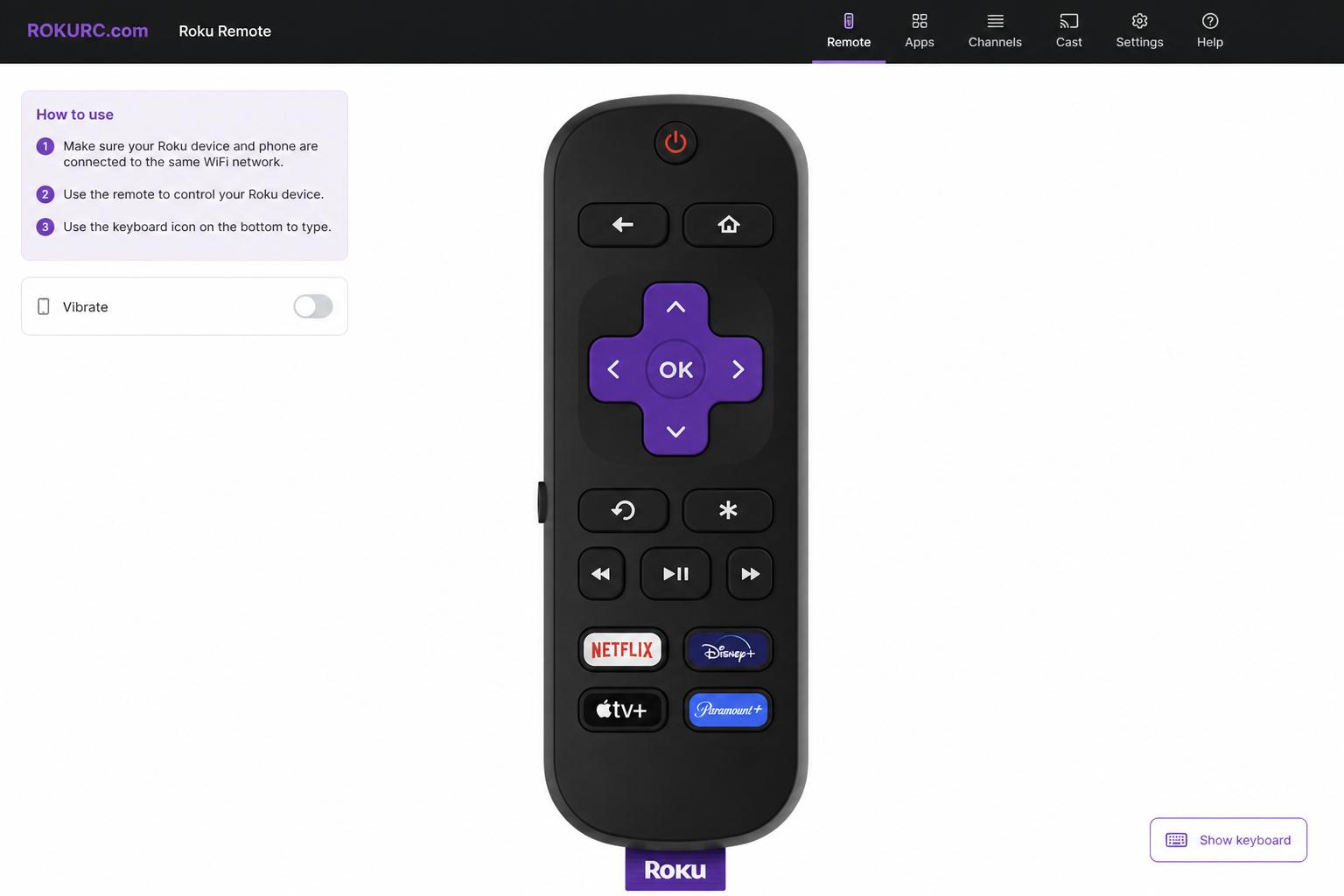
You lost the Roku remote, the hockey game is already in the second period, and a search for “roku remote online free no download rokurc.com” seems like the quickest escape hatch. A web remote in your browser, no app, no install—perfect, right? Maybe. But there are safer, faster, and frankly more reliable ways to get control of your Roku in Canada, without risking your privacy or banging your head against browser limits. This guide walks you through what’s real, what’s risky, and exactly how to get your Roku back under control today, whether you’re in Toronto, Montréal, Vancouver, or a cabin by Lake of the Woods.
Why People Search “roku remote online free no download rokurc.com” (And What That Actually Means)
When you type a phrase like “roku remote online free no download rokurc.com,” you’re probably after one thing: a web page that looks like the familiar purple Roku remote and works instantly in your browser, no apps, no accounts, just click and it controls your TV. That’s a sensible wish, especially on shared computers or work devices where installing apps is a no-go.
Here’s the truth most pages won’t tell you up front: Roku itself does not offer an official browser-based remote you can just visit and use. The official methods are a physical remote or the free Roku mobile app for iOS and Android. Third-party sites might claim you can control Roku online “with no download,” but web browsers are locked down for good reasons (security, privacy), and those locks get in the way of reliable, safe control of devices on your home network.
So should you avoid every web remote entirely? Not necessarily—but you should understand what’s technically possible, what’s too good to be true, and how to spot red flags before you hand control of your living room (and your data) to a site you’ve never heard of. We’ll get into that. First, here’s how to regain control of your Roku quickly and safely, without gambling on unknown websites.
The Safest, Fastest Ways to Control a Roku in Canada (Right Now)
1) Use the official Roku mobile app (free, iOS and Android)
The official Roku app is the simplest way to replace a lost or dead remote, and it’s free on the Canadian App Store and Google Play. It puts a full virtual remote on your phone with directional buttons, a keyboard for typing search terms, and private listening through your phone’s headphones. It also handles voice search (English or French on supported devices) and lets you launch channels like CBC Gem, CTV, Crave, Sportsnet NOW, Prime Video, or The Roku Channel instantly.
Quick setup steps that actually work in Canadian homes:
- Connect your phone to the same Wi‑Fi network as your Roku. If you’re using a dual-band modem from Rogers, Bell, Telus, Shaw, or Videotron, make sure your phone and Roku are on the same SSID (for example, both on “MyHome 5G” or both on “MyHome 2.4G”).
- Open the Roku app, tap Devices, and wait a few seconds. Your Roku player or Roku TV should appear automatically if they’re on the same network and not blocked by guest network settings.
- Tap your device, choose Remote, and you’re back in business.
Common stumbling blocks and fixes:
- If your Roku doesn’t show up, check your router’s guest Wi‑Fi or client isolation settings. Many routers in Canada ship with “AP isolation” turned on for guest networks, which prevents devices from seeing each other. Switch both phone and Roku to the main (private) network.
- Some work or school phones use VPNs that isolate local traffic. Temporarily disable the VPN and relaunch the app.
- Still nothing? Power-cycle your Roku (unplug for 10 seconds, plug back in) and restart your phone’s Wi‑Fi.
Bottom line: If your Roku is already connected to your home Wi‑Fi, the Roku app is the fastest reliable fix. No browser compatibility issues, no sketchy permissions, and it works in English and French for Canadian users.
2) Pair or replace a Roku hardware remote (often the most durable fix)
When you prefer a clicker over a phone, a replacement remote is practical and not expensive. In Canada, the Roku Voice Remote and Roku Voice Remote Pro are widely available and pair wirelessly with most Roku players and Roku TVs.
Typical Canadian prices and where to buy:
- Roku Voice Remote: commonly around $24–$39 CAD, depending on sales.
- Roku Voice Remote Pro (rechargeable, hands-free “Hey Roku”): typically $49–$59 CAD.
- Find them at Roku’s Canadian store, Best Buy Canada, Walmart Canada, Amazon.ca, and some Costco locations. Availability varies by province and season.
Compatibility matters:
- Roku Streaming Sticks require a wireless (RF) Roku remote—an IR universal remote will not work with Sticks.
- Many Roku players (e.g., Express, Premiere, Ultra) can accept IR input, so a simple universal IR remote can work in a pinch. But for voice search and TV controls (power/volume via HDMI‑CEC), get an official Roku Voice Remote.
- Roku TVs from TCL, Hisense, Sharp, RCA, ONN, Westinghouse, and others (sold in Canada) support Roku remotes, though some brand-specific features may vary.
How to pair quickly:
- Insert batteries or charge the remote.
- Press and hold the pairing button until the status light flashes. The pairing button location varies by model (often inside the battery compartment or on the back of rechargeable versions).
- On-screen prompts guide the rest. If the pairing screen doesn’t appear, restart the Roku (Settings > System > System restart) or power-cycle it.
3) Use your TV’s remote via HDMI‑CEC (no app, no new remote)
Many Canadian households can control basic Roku functions using the TV’s own remote. This works through HDMI‑CEC, a standard that lets a device (your Roku) receive navigation commands through the HDMI cable. Great for up/down/left/right, OK, and sometimes play/pause.
How to try it:
- Enable CEC in your TV settings. Brands rename it: Samsung (Anynet+), LG (Simplink), Sony (Bravia Sync), Toshiba (Regza Link), Sharp (Aquos Link), Vizio (CEC), Panasonic (Viera Link). Look for “CEC” or the brand term and turn it on.
- Make sure the Roku is connected to the CEC-enabled HDMI port.
- Switch to the Roku HDMI input and press the TV remote’s arrow keys. If the on‑screen cursor moves, you’re in luck.
Limitations: You won’t get voice search or app launch shortcuts, and some older TVs only pass limited controls. But if you need to navigate to the network screen or open Netflix in a hurry with no downloads, this is often enough.
4) Voice assistants: Google Assistant, Amazon Alexa, and Apple Home (where supported)
Roku players and Roku TVs sold in Canada support Google Assistant and Amazon Alexa for voice control of playback, app launches, and some navigation. Many newer Roku models also support Apple AirPlay 2 and HomeKit for limited control and casting from iPhone, iPad, or Mac.
What you can do without a physical remote:
- “Hey Google, open CBC Gem on Roku.”
- “Alexa, pause Roku.”
- From iPhone/iPad, use AirPlay to send video or mirror your screen to compatible Roku devices (handy when you can’t reach the remote).
Setup tips for Canadian homes:
- Link Roku to Google Home or Amazon Alexa app. You’ll need your Roku account credentials—never share them on third‑party sites. Use only the official apps.
- Voice commands can’t replace every remote function, but they handle the basics and can launch channels if your Roku is already connected to Wi‑Fi.
Can a Web Page Really Control a Roku? The Technical Reality
Let’s talk about the promise behind queries like “roku remote online free no download rokurc.com.” Roku devices include a local control interface called the External Control Protocol (ECP). It runs on your home network (not the public internet) and listens on port 8060. Send a simple HTTP command—like a keypress—to your Roku’s local IP address, and it responds immediately. That’s how official apps talk to the device.
So, in theory, a browser-based remote could send these HTTP commands and control your Roku without any install. In practice, modern browsers block a lot of the shortcuts that random websites would need. Here’s why most “no download” web remotes feel flaky—or ask for odd permissions you shouldn’t grant.
Roku’s ECP in a nutshell
ECP is straightforward and documented publicly by Roku. It supports endpoints like:
- Key presses: send an HTTP POST to http://[ROKU_IP]:8060/keypress/Home (replace [ROKU_IP] with your Roku’s internal IP, such as 192.168.0.42).
- App launch: POST to /launch/[app_id].
- Queries: GET /query/apps or /query/device-info.
If you can send those commands from your network, the Roku responds fast. That’s why the official mobile app works so well on the same Wi‑Fi. But here’s the catch for web pages you visit across the internet.
Why browser-based remotes struggle (CORS, discovery, and HTTPS)
Browsers enforce security models that stop a random site from poking at devices on your private network without consent. Good for you, inconvenient for would-be web remotes. The biggest hurdles:
- Discovery: Finding your Roku’s local IP (for example 192.168.x.x) via a web page is non-trivial. Browsers can’t run the same local-network scans native apps can.
- CORS (Cross-Origin Resource Sharing): Even if a page knows your Roku’s IP, a fetch from https://randomsite.com to http://192.168.x.x:8060 is “cross-origin” and typically blocked unless the Roku responds with specific CORS headers. Roku’s ECP isn’t designed for open CORS.
- Mixed content: Most sites are served over HTTPS, while your Roku ECP uses plain HTTP. Modern browsers refuse or restrict those calls.
Workarounds exist—some pages rely on hacks (iframes, no-cors requests where you can’t read responses, asking you to disable protections, or installing extensions). That’s exactly the territory where you should pause and ask: is shaving three minutes off my setup worth weakening my browser’s security?
Evaluating rokurc.com (or any “free no download” Roku remote site) without taking risks
This isn’t an endorsement or a condemnation of any specific website, including rokurc.com. The point is to evaluate claims like “roku remote online free no download rokurc.com” with a cool head. A quick safety checklist before you click or tap Allow:
- Is it official? Roku’s official sites are on roku.com subdomains. rokurc.com is not an official Roku domain.
- Does the site ask for your Roku account email/password? That’s a red flag. A local remote should not need your account credentials.
- Does it prompt for strange permissions (notifications, clipboard access, extensions)? Not necessary for sending simple local commands.
- Is there a clear privacy policy compliant with Canadian standards (PIPEDA) and a way to contact the operator?
- Are there aggressive pop-ups, redirects, or requests to disable your browser protections? Walk away.
Realistically, a website can’t reliably control your Roku across all browsers without asking you to loosen security. That’s why the safe play for Canadians is to use the official Roku app, a hardware remote, or the HDMI‑CEC trick with your TV remote. If you still want a browser solution, do it privately on your own network (see the DIY section below), not through an unknown third party.
Lost Remote? Step-by-Step Recovery Paths for Canadian Homes
If your Roku is already connected to your home Wi‑Fi
This is the easy one. You don’t need “roku remote online free no download rokurc.com” at all.
- Install the official Roku app from the Canadian App Store or Google Play.
- Connect your phone to the same Wi‑Fi SSID as the Roku.
- Tap Devices in the app, select your Roku, then Remote. Done.
If your phone and Roku still can’t see each other, verify that you’re not on a guest network. On some ISP gateways used across Canada (Rogers Ignite, Bell Home Hub, Telus Wi‑Fi Hub), the guest network blocks device-to-device traffic. Use the main Wi‑Fi network instead.
If your Roku was reset or joined to a different Wi‑Fi
Without a physical remote, changing Wi‑Fi is tricky—but not impossible:
- Ethernet lifeline: If you own a Roku Ultra (commonly sold in Canada) or a Roku TV with Ethernet, plug it in to your router. The Roku app can find it over Ethernet, and you can switch Wi‑Fi from Settings using the app’s remote.
- Hotspot clone: If you remember the old Wi‑Fi name and password, create a hotspot with the same SSID and password on a spare phone. Your Roku will auto-connect, and your main phone with the Roku app can join that same hotspot to control the Roku and change the Wi‑Fi to your new network. Watch your data plan—streams will use mobile data until you move the Roku back to home Wi‑Fi.
- HDMI‑CEC with TV remote: Use the TV’s remote to navigate far enough to reach Settings > Network > Set up connection, then finish setup with on‑screen prompts.
If you only have a Roku Streaming Stick (no Ethernet)
Streaming Sticks run exclusively over Wi‑Fi, and pairing a new network without a remote can be a hassle. Your best bets:
- Use the hotspot clone trick described above.
- Borrow a Roku RF remote from a friend or neighbour just long enough to connect your Stick to Wi‑Fi. Any compatible Roku voice remote should pair for setup.
- Try your TV’s HDMI‑CEC controls to get to Network setup. Some TVs allow it; some don’t.
If you’re in a hotel, dorm, or condo guest Wi‑Fi
Hotel & Dorm Connect is supported on many Roku models, including those sold in Canada. But you usually need a remote to complete the captive portal login. Without it, try one of these:
- Ask the front desk or residence IT if device isolation is enabled. If yes, the Roku app won’t see the Roku, even on the same SSID. You’ll need the physical remote or a network exception.
- Use your phone’s hotspot if your carrier plan allows enough data. It avoids captive portals entirely. Check your plan details with Rogers, Bell, Telus, Videotron, Freedom, or SaskTel before streaming hours of HD content.
A Private, No-Third-Party Browser Option (DIY on Your Own Network)
If you’re determined to click buttons in a browser and skip installs, the safest way is to do it yourself, locally, and skip unknown sites. Here’s a simple, low-tech approach that works on any laptop in your home and doesn’t involve risky permissions.
Send ECP commands directly to your Roku from your computer
You can talk to the Roku using plain HTTP commands on your local network. This avoids rokurc.com or any other third-party. You’ll need your Roku’s IP address (find it under Settings > Network > About). Then, from a computer on the same Wi‑Fi (or Ethernet), you can issue commands.
Examples that work on macOS, Linux, or Windows with curl installed:
- Home button: send an empty POST to http://ROKU_IP:8060/keypress/Home
- Up/Down/Left/Right: POST to /keypress/Up (or Down/Left/Right)
- OK/Select: POST to /keypress/Select
- Back: POST to /keypress/Back
- Play/Pause: POST to /keypress/Play
Typed out, that looks like: curl -d “” http://192.168.0.42:8060/keypress/Home
That isn’t pretty, but it’s safe, fast, and private. You can even save shortcuts as scripts or use a simple HTTP client like Postman or Insomnia. It’s not a glossy “roku remote online free no download rokurc.com” experience, but it gives you reliable control without handing the keys to a random website.
Important: Only do this on your home network. Do not expose port 8060 to the internet. Your Roku is designed to be controlled locally, not from the outside world.
Privacy, Security, and Scams: What Canadians Should Watch For
It’s not just about whether a web remote works; it’s whether it respects your privacy and wallet. A few pitfalls show up often in Canada.
Fake “activation fees” and support numbers
Roku activation is 100% free. If a site or phone number—sometimes in search ads—asks for a fee to activate your Roku, it’s a scam. Roku warns about this regularly. In Canada, report scams to the Canadian Anti-Fraud Centre and avoid sharing credit card details over the phone with unknown operators.
Sketchy web remotes and account phishing
Be suspicious if a site like the ones you find by searching “roku remote online free no download rokurc.com” asks for your Roku account or email and password. A local remote has no need to log you into anything. If you’ve already entered credentials, change your Roku password immediately and enable any available security features on your email account.
Browser security warnings matter
If your browser warns about mixed content, unsafe scripts, or blocked cross-origin requests, don’t brute force your way around it by disabling protections or installing odd extensions. It’s easier and safer to use the official Roku app or a replacement remote from a Canadian retailer.
Canadian privacy law and your data
Under PIPEDA, organizations that collect personal data from Canadians must handle it responsibly. Legitimate services post clear privacy notices and contact information. If you can’t find a privacy policy, or it reads like it was machine‑translated with no Canadian contact details, don’t use the service. The Roku mobile app is the trustworthy route here.
Accessibility, Language, and Family-Friendly Tips for Canadian Households
French Canadian interface and input
Roku devices support Canadian French for the interface and voice search on supported models. If your household is bilingual, the official Roku app makes switching language and entering accented characters much easier than hunting letters with a directional pad. That’s a plus the “online no download” remotes can’t match reliably.
Audio Guide and captions
For low-vision users, Roku’s Audio Guide reads menus aloud. Enabling it without a physical remote can be tough, but once you have control through the mobile app or CEC, turn it on in Settings > Accessibility. Closed captions are available in most Canadian streaming apps; set them in Roku settings or within the specific app (CBC Gem, Crave, etc.).
Parental controls and Guest Mode
Roku’s PIN and Guest Mode help when you host visitors or kids. Guest Mode lets someone sign in to their own apps temporarily and automatically signs them out on a date you set. You’ll manage these features more confidently in the official ecosystem than through an improvised web remote.
Cost and Availability in Canada: Where to Buy, What to Expect
Where Canadians can get remotes—and delivery times
Roku remotes and compatible TVs are widely sold across Canada. You’ll find them at:
- Roku’s online store (ships across provinces and territories)
- Best Buy Canada (in-store pickup is handy in cities like Calgary, Ottawa, Winnipeg)
- Walmart Canada (often the lowest prices; stock varies)
- Amazon.ca (watch for third-party sellers; check reviews and fulfillment)
- Costco (seasonal availability; strong return policy)
Shipping to major centres (GTA, Greater Vancouver, Montréal) typically arrives within 2–4 business days. Remote northern communities and territories may take longer; Canada Post and couriers list estimated times at checkout.
Typical Canadian pricing
- Roku Voice Remote: about $24–$39 CAD depending on promo
- Roku Voice Remote Pro: about $49–$59 CAD
- Universal IR remote (for IR‑capable Roku players, not Sticks): as low as $15–$30 CAD
Prices swing during Boxing Week, Back‑to‑School, and Black Friday. If you need a remote urgently, factor in the cost of delay versus temporary workarounds (app, HDMI‑CEC, voice assistants) you can employ today.
Warranty, returns, and e‑waste recycling
Roku devices typically carry a one-year limited warranty. Retailer return windows vary: Costco is generous, Best Buy and Walmart are more traditional (14–30 days, sometimes longer during holidays). Keep your receipts and boxes. When replacing old remotes or Roku players, recycle electronics responsibly through provincial programs like Recycle My Electronics (EPRA) in Ontario, British Columbia, Saskatchewan, Manitoba, PEI, and Nova Scotia, or local municipal e‑waste depots in Quebec and Alberta.
Troubleshooting: When the App or Remote Still Won’t Work
Network isolation and guest Wi‑Fi
If your phone app can’t see the Roku, but both are “on Wi‑Fi,” you may be on a guest or isolated network. On Rogers Ignite, Bell Home Hub, Telus, and similar gateways, ensure you’re on the primary SSID. Disable band steering temporarily if devices hop between 2.4 GHz and 5 GHz with different SSIDs and lose each other.
Firewalls and security software
Some home firewalls block device discovery traffic. If you’re comfortable, temporarily reduce security from “High” to “Medium” to test, or enable UPnP/Multicast for local discovery (just for troubleshooting). Re-enable stronger settings once the app finds your Roku.
2.4 GHz vs 5 GHz realities in Canadian apartments
Dense condo towers in Toronto, Vancouver, or Montréal can be a soup of overlapping 2.4 GHz networks. If your Roku or phone struggles, try placing both on 5 GHz, or use Ethernet for Roku players that support it. If you only have 2.4 GHz, change your router’s channel to a less congested one (1, 6, or 11) and move microwave ovens and baby monitors away from the Roku.
Roku OS updates and power cycles
After pairing a new remote or connecting via the app, it’s worth checking for updates: Settings > System > Software update. If the remote behaves erratically, replace batteries (for non‑Pro remotes) and reboot the Roku. Intermittent Wi‑Fi or USB power from a TV port can also cause glitches; plug the Roku into a wall outlet if possible.
Comparison: Your Options to Control Roku Now
| Option | Cost (CAD) | Setup Speed | Works Without Wi‑Fi? | Privacy/Security | Pros | Cons |
|---|---|---|---|---|---|---|
| Official Roku mobile app (iOS/Android) | Free | Fast (1–3 minutes) | No | High (official) | Full remote, keyboard, voice, private listening | Needs same Wi‑Fi; some guest networks block it |
| Roku Voice Remote / Voice Remote Pro | $24–$59 | Fast (2–5 minutes) | Yes | High | Physical buttons; works even if phone is away | Costs money; must ensure compatibility |
| TV remote via HDMI‑CEC | Free | Fast (1–3 minutes) | Yes | High | No download; basic navigation | Limited controls; not always supported |
| Voice assistants (Google/Alexa/HomeKit) | Free | Moderate (5–10 minutes) | No | High (official integrations) | Launch apps, control playback | Limited navigation; needs Wi‑Fi and linking |
| Third‑party web remote (e.g., “roku remote online free no download rokurc.com”) | Free | Varies | No | Unknown | Nothing to install if it works | Browser blocks, privacy risks, unreliable |
| DIY local ECP commands (curl/Postman) | Free | Moderate (5–15 minutes) | No | High (local only) | Private, no third‑party site | Not as user‑friendly as an app |
Practical Scenarios and Exact Moves
I just walked in, the game is on, and I can’t find the remote
Try HDMI‑CEC with your TV remote first for immediate navigation. While it’s working, install the Roku app on your phone to regain full control. If CEC doesn’t respond, grab the Roku app straight away and connect to your Wi‑Fi.
I moved, changed internet providers, and my Roku says “Not connected”
If it’s a Roku Ultra or Roku TV with Ethernet, plug in a cable and finish setup with the mobile app. If it’s a Streaming Stick, clone your old SSID on a mobile hotspot, let the Roku connect, then move it to the new Wi‑Fi in Settings.
I searched “roku remote online free no download rokurc.com” because my office PC doesn’t allow app installs
Your safest route is the HDMI‑CEC trick or using your personal phone with the official Roku app. If you absolutely must use a browser on that PC, consider the local DIY ECP approach on your home network rather than trusting an unknown site. Don’t install extensions or lower your security policy just to make a “web remote” work.
Canadian-Specific Notes on Channels and Features
Roku devices in Canada support a growing lineup of apps: CBC Gem, CTV, Global TV, Citytv, Crave, Sportsnet NOW, TSN, Noovo, Prime Video, Netflix, Disney+, Apple TV, and The Roku Channel (with free content and live channels in Canada). Voice search can find titles across supported apps, but account linking and subscriptions still live within each provider. None of these services requires paying for Roku activation, and none needs you to share account info with a third‑party “online remote.”
When an “Online, Free, No Download” Pitch Makes Sense—And When It Doesn’t
There’s a reason people search for “roku remote online free no download rokurc.com”: convenience. But convenience that breaks browser security or asks for your credentials isn’t worth it. If a tool can’t work without you turning off protections, it’s not the magic wand you hoped for. Use the official app, your TV’s CEC, a replacement remote, or a local DIY method. You’ll spend less time troubleshooting and more time watching.
Conclusion: Gain Control Without Guesswork
If you came here via “roku remote online free no download rokurc.com,” you were looking for a fast, zero‑install solution. The fastest safe solutions for Canadians are already in your pocket or living room: the official Roku app, your TV’s HDMI‑CEC, or a reasonably priced replacement remote delivered in a day or two. If you really want a browser button to click, keep it local and private—don’t hand your session to an unknown site. Five minutes now beats a compromised account later.
FAQ
Is there an official Roku web remote I can use in a browser without installing anything?
No. Roku does not offer an official browser-based remote. The official, free solution is the Roku mobile app for iOS and Android, plus hardware remotes and HDMI‑CEC with your TV remote.
Is rokurc.com an official Roku site?
No. Official Roku domains are on roku.com. If a site discovered by searching “roku remote online free no download rokurc.com” claims to be official, treat that as a red flag. Avoid entering your Roku account credentials on third‑party sites.
Can a website really control my Roku without downloads?
Technically, a web page can try to send commands to your Roku on your local network, but modern browsers block many of the methods needed (CORS, mixed content). That’s why these sites are unreliable and often ask for risky permissions. Safer alternatives include the official Roku app, HDMI‑CEC, or a local DIY approach using Roku’s ECP.
How do I find my Roku’s IP address without the remote?
Check your router’s connected device list (often under DHCP clients). Look for “Roku” or the device’s hostname. If you can reach the Roku menu using TV HDMI‑CEC, go to Settings > Network > About to see the IP.
What if my Roku won’t connect to my new Wi‑Fi and I don’t have a remote?
Use Ethernet on a Roku Ultra or compatible Roku TV to get control via the app, or clone your old Wi‑Fi SSID and password with a mobile hotspot so the Roku auto-connects, then change networks in Settings.
Will a universal remote work with Roku?
Often, yes—for Roku players that accept IR. Many cheap universal remotes include Roku codes. Roku Streaming Sticks, however, require a wireless (RF) Roku remote and won’t work with a basic IR universal remote.
Can I use Google Assistant or Alexa to control Roku in Canada?
Yes. Link Roku in the Google Home or Alexa app to launch channels and control playback with voice. It won’t replace full navigation, but it’s handy when your physical remote is missing.
Is the Roku mobile app free in Canada?
Yes. The official Roku app is free on the Canadian App Store and Google Play. It provides a full virtual remote, voice search, a keyboard, and private listening.
How much does a replacement Roku remote cost in Canada?
Expect roughly $24–$39 CAD for a Roku Voice Remote and $49–$59 CAD for the Roku Voice Remote Pro, depending on promotions and retailer.
How do I enable HDMI‑CEC so my TV remote controls Roku?
Turn on CEC in your TV settings. Brand names vary: Anynet+ (Samsung), Simplink (LG), Bravia Sync (Sony), Viera Link (Panasonic), Aquos Link (Sharp), Regza Link (Toshiba). Then select the Roku HDMI input and test arrow keys and OK.
Are there risks with third‑party “online remotes” beyond not working?
Yes. Some sites ask for unnecessary permissions, push sketchy extensions, or try to collect credentials. Stick to official tools or local DIY methods to protect your privacy and devices under Canadian privacy norms.
Can I control Roku from a work computer without installing software?
Use your TV’s HDMI‑CEC with the TV remote, or your personal phone with the official Roku app. If you insist on a browser-only method, consider local ECP commands on your home computer rather than using third‑party websites—work IT policies may block them anyway.
Does The Roku Channel work in Canada?
Yes, The Roku Channel is available in Canada with a selection of free, ad-supported content and live channels. Availability and titles can differ from the U.S. catalog.
What should I do if I paid an “activation fee” I found online?
Contact your card issuer immediately to dispute the charge and report the scam to the Canadian Anti-Fraud Centre. Roku activation is free—any fee request is fraudulent.
Is there any way to use a browser as a Roku remote safely?
Yes—privately, on your own network. Use local ECP commands (for example, with curl or an HTTP client) sent directly to your Roku’s IP address. Avoid third‑party web remotes that require loosening your browser’s security or sharing account credentials.